




Powered by AI, the Digital Health Screening Tool is designed to optimise the precision of non-communicable disease (NCD) screening and improve health program outcomes. Built-in risk stratification algorithms and multi-level health system integration allows for reduction in unnecessary repetitive screening cost, targeted allocation of screening slots, and better profiling at detecting undiagnosed NCD cases, in comparison with current conservative methods of relying on individual self-declaration of risk factors.
Individuals can use their mobile device to access a comprehensive health screening service with our digital health screening tools anytime and anywhere.
It aims to empower individuals to take control of their health and detect potential health issues early on, enabling them to make lifestyle changes and seek medical treatment if necessary. Early detection and management of diseases can help prevent complications and improve the users' health outcomes.
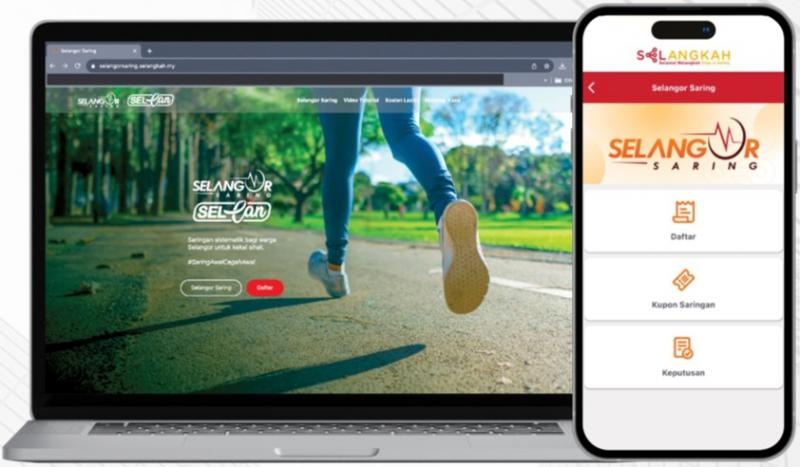
Based on our case study for Selangor Saring Program, Selangor Saring is carried out across the state based on the government’s early screening, diagnosis and treatment policy. The digital health screening tool in Selangkah is used to optimise efficiency, allowing for precision screening through predictive user risk profiling. The key achievements are
1. Encouraging Outcomes: Predictive risk profiling boosted turnout to 70% and positive yield to 65%, and reduced follow-up loss to 30%, surpassing the national benchmarks of 30%, 40%, and 80% respectively.
2. Seamless Information Exchange: 51 and 17 participating clinics and hospitals, respectively, had exchanged information digitally, with 2,380 referral appointments generated — a unique feature in Malaysia.
3. Increased Participation: Digital methods led to 81,415 screenings conducted with 27,428 registrations recorded, boasting a strong 67% attendance rate, which is among the highest in the country.
4. Program Impact: Digital analysis revealed an increase in chronic kidney disease cases among Selangor Saring participants in 2022, prompting continued screening in 2023. Early intervention could save RM88 million in annual haemodialysis costs for 3,056 participants.