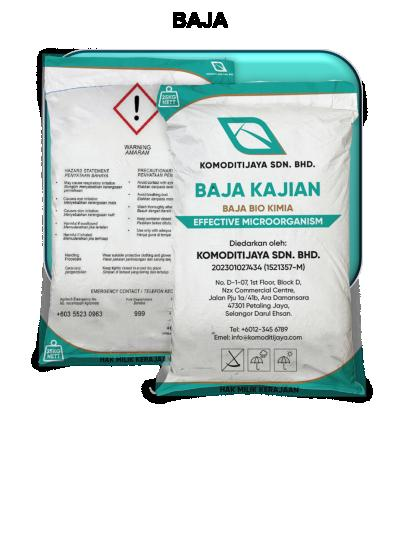




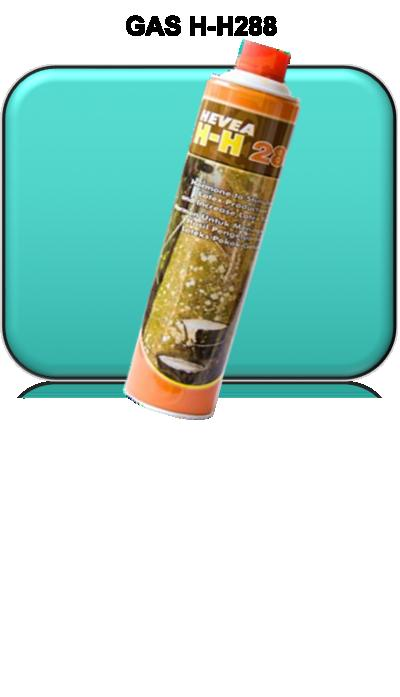
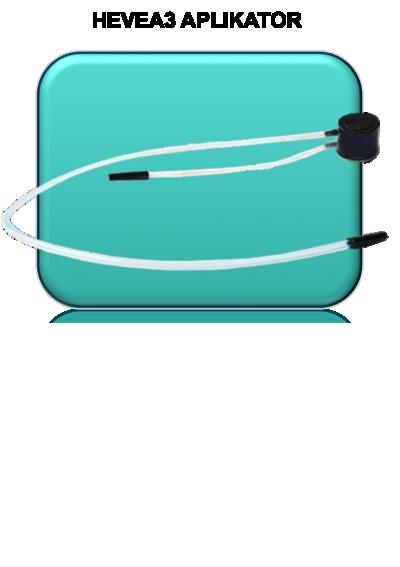
The innoculation of Ethylene Gas into rubber trees has been proven to be effective in enhancing the production of latex from rubber trees. The features of the product - HEVEA 3 - takes this a step further, by combining both the biological solution (Ethylene Gas) with the mechanical design necessary to hasten the innoculation of the gas into the rubber trees. This combination has allowed for an increase in yield of up to 5 times the national baseline yield. The market for HEVEA 3 spans beyond Malaysia. Since it has a uniform effect on all rubber trees (Hevea Brasiliensis), this product is highly sought after in countries relying on latex and rubber product as their commodity, especially in Indonesia and Thailand. The product is currently being tested by the Government of Malaysia and FELDA for the purpose of mass commercialisation in government and private owned rubber plantations.
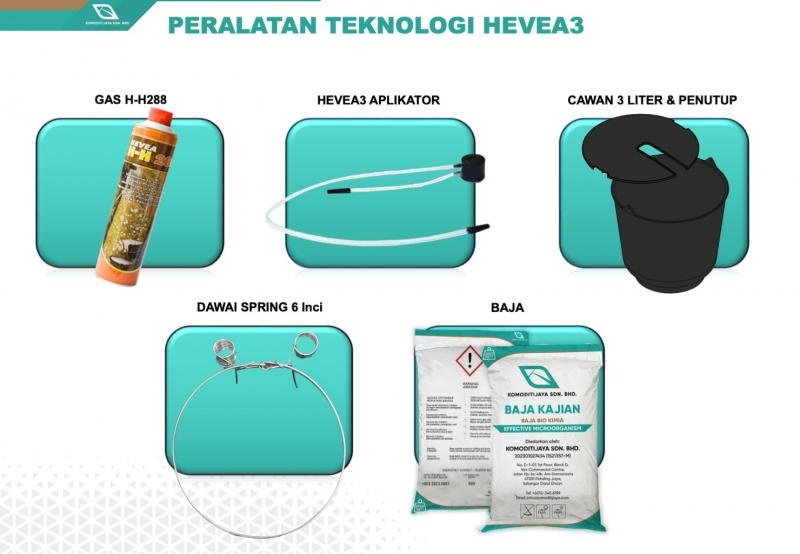

The innoculation of Ethylene Gas via HEVEA 3 is regulated by the gas pouch, which functions as a holding space for the gas before it is absorbed by the rubber trees. This solves the decades old problem of rubber tree overdose, which had led to the tree and bark rot in trees stimulated by other stimulants in the market.
The tapping panel of trees stimulated with HEVEA 3 technology only requires the width of one's palm, or S4, in rubber tapping lingo, as opposed to the conventional practice of tapping a full half of the rubber tree, or S2. Even with this much reduced tapping panel, the rubber yield productivity of tree stimulated with HEVEA 3 can still produce 5 times more than normal trees.
The can used to store Ethylene Gas for the purpose of innoculation onto the rubber trees only weigh 160 grams, which makes it highly practical for usage in rubber plantation at covering long distance and multi type terrain.
The HEVEA 3 technology has been proven to work on any type of Rubber Trees, with field tests carried out in the Indonesia, Thailand, Philippines, Cambodia and Bangladesh.
The 5 times rubber yield Increase ensures the income increase on both the rubber tree owners, rubber tappers and rubber yield wholesalers. The result of the Pilot Project carried out in FELDA Wilayah Alor Setar shows that the increment of income on the side of the settlers has effectively brought them out of the B40 category to M40 category.