


MINDA 2025: How Malaysia’s Innovators Are Learning to Build Technologies That Can Actually Enter the Market
For years, Malaysia’s innovation ecosystem has been celebrated for its creativity, diversity of talent and strong R&D output. But behind the scenes, many innovators quietly admit the same frustration: building the technology wasn’t the hardest part — getting it certified, protected, and acquired was.
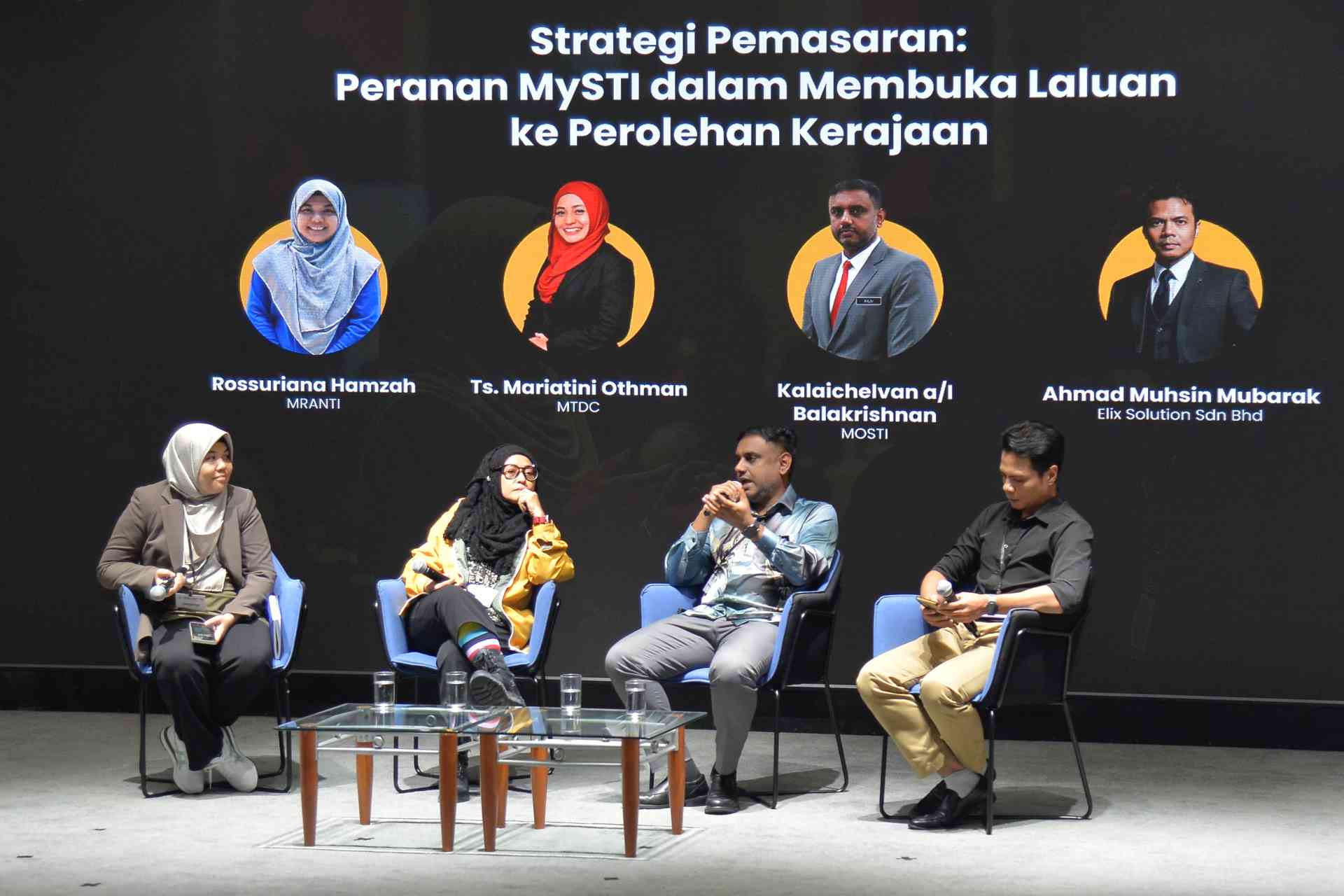
It’s a reality that rarely makes headlines. This year, MINDA 2025 (MySTI Interaction Day) set out to confront that reality head-on. Organised by the Malaysian Research Accelerator for Technology and Innovation (MRANTI) with support from the Ministry of Science, Technology and Innovation (MOSTI), the programme brought together innovators, regulators, certifiers and procurement bodies in one place — forming an unusually direct bridge between Malaysia’s creators and the decision-makers who determine whether a product can actually reach the market.

Muhundhan Kamarapullai, MRANTI Chief Digital Officer, during his welcoming remarks at MINDA 2025.
Across four sessions, MINDA 2025 revealed the complex forces that shape Malaysia’s innovation journey: compliance bottlenecks, IP pitfalls, documentation errors, procurement hurdles, and the continuous need to align technology with national governance frameworks.
This is how 2025’s cohort learned to turn ideas into market-ready solutions, and what it tells us about Malaysia’s future competitiveness.
SESSION 1: From Prototype to Certification – Effective Compliance Pathways
The first session of MINDA 2025 immediately surfaced a truth that many Malaysian innovators face but rarely articulate: building a prototype is only half the journey. The other half, often longer, more complex, and far less glamorous, is navigating the compliance, safety and certification ecosystem that determines whether a product ever reaches the market.
Moderated by Ibnu Mohamed from MRANTI, the session brought together key regulatory and certification bodies including the Medical Device Authority (MDA), Standards and Industrial Research Institute of Malaysia (SIRIM), SIRIM QAS International, the National Pharmaceutical Regulatory Agency (NPRA), and CyberSecurity Malaysia. Their combined perspectives painted a clear picture of what it actually takes for Malaysian innovations to be approved, certified, and trusted.

Panellists during session 1 of MINDA 2025
What emerged was the same message echoed across multiple regulators: compliance must begin as early as R&D. Many innovators still assume that documentation, safety validation and regulatory checks can come after the prototype is complete. In reality, early compliance decisions directly determine whether a product can move smoothly or painfully through the certification pipeline.
One example shared highlighted a recurring point, where the importance of correctly identifying whether a product qualifies as a pharmaceutical or a medical device, as the two pathways require different evidence and regulatory actions. Pharmaceuticals demand proof of pharmacological or metabolic action, while medical devices do not. Misclassification at the beginning leads to months of repeated testing, reworking, and resubmission.
SIRIM highlighted another major stumbling block: incomplete documentation. Technical specifications, SOPs, and test reports form the backbone of certification, and many companies underestimate the level of detail required. Factory inspections often fail because processes are undocumented or poorly standardised. To support early-stage innovators, SIRIM introduced its Product Appraisal Scheme, designed specifically for pre-commercial companies needing structured guidance before formal certification.
NPRA reinforced that pharmaceutical evaluation prioritises quality, safety and efficacy—standards aligned with global benchmarks. Meanwhile, CyberSecurity Malaysia emphasised that digital health solutions, IoT devices, and software-driven products must now pass cybersecurity checks aligned with current legislation and national frameworks. As digital components become more common across sectors, cybersecurity compliance has effectively become a prerequisite for product approval.
Throughout the session, panellists reiterated that safety validation and risk classification are not optional extras. Medical devices, for instance, fall under risk classes A to D, from low to extreme-high risk, and this classification dictates the depth of assessment, documentation, and licensing needed. Innovators who understand their risk category early on move significantly faster through the system.

Idamazura Idris of Medical Device Authority (MDA)
This shift toward early compliance was captured in a sharp reminder from Idamazura Idris of MDA:
“Safety evidence must be collected from the R&D phase to ensure a smooth application process.”
And with digital innovation accelerating, Wan Shafiuddin Zainudin from CyberSecurity Malaysia stressed a point increasingly relevant across industries:
“Cybersecurity compliance is not just about protecting data—it determines the approval of digital products.”
The session concluded with clarity: Innovators who embed compliance into their design and R&D processes will gain a strategic advantage, thus moving faster, avoiding rework, and strengthening trust.
Among the strongest takeaways was the need for complete, consistent documentation when submitting applications to certifications bodies such as MDA, SIRIM, NPRA and CyberSecurity Malaysia. Any gaps or inconsistencies slow down the entire process.
Overall, Session 1 made the journey from prototype to certification far less mysterious. Innovators concluded their participation in MINDA with better clarity of the real expectations of regulators, the practical steps needed to accelerate approval, and the importance of aligning product development with compliance from day one.
This shift in mindset from inventing first to designing with compliance in mind marks the beginning of a more mature, market-ready Malaysian innovation ecosystem.
SESSION 2 — Protecting What You Create: Why IP Strategy Is Now a Survival Skill for Malaysian Innovators
If Session 1 revealed how compliance determines innovation readiness, Session 2 went straight into another critical truth: an innovation that isn’t protected is an innovation that can be taken, copied, or commercialised by someone else.
Moderated by En Mohd Hafiz Talib of MRANTI, the conversation with MyIPO’s Tuan Mohamad Rahimi Arafpin unpacked the core strategies that innovators must master if they want their ideas to survive long enough to reach the market.
The session began with a simple but urgent reminder: every idea has a “birthdate”, and innovators must secure that timestamp. Whether it’s a patent, trademark, or industrial design filing, registration protects the innovation from being replicated, challenged, or misused—especially once it begins gaining public attention.
Rahimi emphasised the biggest mistake Malaysian innovators still make: showcasing their innovation before protecting it. Pitching at competitions, joining accelerators, sharing prototypes online, or even presenting in front of investors without IP registration exposes innovators to risk. In many cases, opportunistic parties move faster than the original creator.

MyIPO’s Tuan Mohamad Rahimi Arafpin’s advice was unmistakable: file first, reveal later.
From there, the session explored the machinery behind strong IP protection. Patents and industrial designs require extensive documentation—technical details, drawings, claims, and clear proof of originality. The 18-month verification period for patents may feel lengthy, but MyIPO clarified that the timeline exists for a reason: it gives innovators space to refine their invention while securing priority rights.
This is a crucial buffer in a market where competition moves fast, and imitation moves faster.
The session also highlighted how MyIPO supports local industry players beyond the filing process. Through educational programmes, advisory services, and fee discounts, MyIPO aims to reduce barriers for startups and SMEs—many of whom still consider IP registration optional rather than foundational.
A strong IP strategy isn’t only about defence; it is also an enabler. Properly structured IP opens pathways for licensing, collaboration, investor confidence, and international market entry. As Rahimi put it:
“Register your IP before disclosing your product to ensure the innovator’s rights are protected.”
and:
“Strategic IP protection doesn’t just safeguard your innovation, it creates new opportunities for collaboration and market expansion.”
Another important insight surfaced during the discussion: when dealing with complex patent filings, using a professional IP agent often speeds up the process and avoids technical mistakes that could compromise protection later. This is particularly important for deeptech, biotech, or engineering-heavy inventions where precise documentation is critical.

Participants at MINDA MySTI 2025 listening attentively as the panellists unpack the critical steps from prototype to certification, reflecting strong interest in Malaysia’s evolving innovation and compliance landscape.
The outcomes of the session were clear and actionable. Innovators must treat IP as an integral part of early development, not an afterthought. MyIPO stands ready to support them with strategic guidance, but the onus remains on creators to document their ideas, secure their ownership, and register their intellectual property before sharing it with third parties.
In an ecosystem working hard to strengthen Malaysia’s technological competitiveness, this mindset shift is not merely beneficial; it is essential.


